The name may not be the clearest and the Russian may be a little daunting to non-cyrillic speakers, but NoNaMe and its world music website has some of the most eclectic world music I've seen on the Internet. The site seems to have a special love for Balkan music while still having selections from around the world.
You have to register which is just a simple login, email, password and password confirmation. To non-cyrillic speakers, you have to click the " регистрация" in order to get the registration page. Or you can just click here to register.I know, its daunting at first but all the posts are in english and its pretty easy to navigate
Here is just a quick list of the quality Balkan Music I've found on the website:
There are 92 pages of music, at roughly 15 posts each. . . makes almost 1400 entries of fully downloadable music with reviews, commentary and history of each artist. This is definitely a great resource for those wanting to learn more about Balkan Music and World Music in general.
Here is a clip of Kukeri or sometimes referred to as Surva. This particular clip is from a Bulgarian friend of mine who attended the festival this year. The tradition has been loosely traced to Thracian times and has a rich cultural history throughout Bulgaria. The costumes are made of goat hair and each village or city has its own particular style. This style is from the Pirin region (Blagoevgrad, Simitli, Razlog, Bankso). The music in the background is called Zurni which is the name of a clarinet instrument called a zurna. I posted about Zurni music a couple of months back. The music is historically based from Turkish Mehter Marching Music.
Surva.org is the official website for the Pernik Festival and more travel information can be found there. Anyne thinking of traveling to Bulgaria during the winter should seriously consider attending one of these festivals. It is a hidden gem of sorts that isn't advertised as much in the travel guide books. There are festivals in the month of January (but not limited to) at Razlog, Pernik, Simitli.
Here is another clip from the Pernik festival. The style is from the looks of it from Pernik but i'm not completely sure. I've got more clips and videos and I hope to upload them later. Email me if you are interested in more of these Kukeri clips.
The Luminescent Orchestii just released a new CD called Neptune's Daughter from the Nine Mile Records label. Luminescent Orchestrii is another great example the fusion coming out of the New York music scene. They get interwoven with Gogol Bordello and other musicians fusing Roma and Balkan influences to create great music the acts like a spokesperson for the region and the sound. Neptune's Daughter still has these Balkan influences but you can tell the the musicians are creating their own sound and one should be careful to label them as a definitive representation of traditional Balkan music. However, one should feel comfortable in their musical ability and distinctive sound.
My Introduction to the Luminescent Orcherstrii:
It was the fall of 2003 and I was visiting my sister in NYC while she was in school in Brooklyn. For whatever reason, we were wondering around DUMBO (Down Under Manhattan Bridge Overpass) on a Saturday as the evening drew close. If I remember correctly, it had rained and we were looking for a place to get out of the rain but most of the shops were closing. As we searched, we started here some form of music emanating from a loading dock / garage on Main St., it seem like an impromptu concert space because I can't find the location online.
We happened upon the beginning of the a set by Luminescent Orcherstrii just as it was getting dark. The crowd was typically Brooklyn, meaning beyond definition and characterization other than hipster/young professional in New York. As we walked in, they played one of their more well known songs, Taraf Hijacked, which is a loving imitation to the Romanian Roma band called TarafdeHaidouks. My sister, on impulse, promptly bought their Live recording without either of us understanding the genre or even really the name of the group performing. Until this year, the record sat dormant until I rediscovered it while searching for more Balkan Music.
Taraf Hijacked - Bulgarian Bar (Mehanata)
Better Quality Audio:
The Luminescent Orchestrii and Neptune's Daughter:
This is by no means a Gogol Bordello record, neither is it Balkan Beat Box reformed. Luminescent Orchestrii uses these catchwords as most lessor known musicians do to allow people to notice their music. I'm by no means an expert but I would consider that Luminescent Orchestrii leans more towards folk music (spanned internationally) than it does have something to do with "Gypsy Punk" or Balkan Beat Mashups. However, if I was LuminescentOrchestrii, I too would use the same strategy to market my new album. The music is within the same sphere and music scene. Anyone that enjoys Gogol Bordello or Balkan Beat Box should give Luminescent Orchestrii a chance to expand their folk and Balkan knowledge ( I also recommend listen to native Balkan musicians as well). They play at the same clubs at Gogol Bordello and other Balkan musicians at the the Bulgarian Bar or Mehanata.
The tracks vary in style and tempo ranging from Bulgarian and Moldovian traditional folk to folk ballads of their own making. For the most part, the cd takes on a slow tempo that matches its folksy sound and lyrics.
Bottom Line: Good folk music from New York with Balkan, Turkish and Cuban influences. Definitely listen to it. Its another great example of how Balkan music is influencing music around the world.
I've been playing a lot of The Balkan Hotstep Soundsystem and DJ Typsy Gypsy over the Christmas break. I've been amazed by the feed back. These lovable mashups are pretty catchy and I've had lots of people call in asking who they are and where they are from. What's great about this music is it samples some of the best Balkan musicians, mostly Roma, and mashes them up with hip-hop that we are all comfortable with. For the most part, everyone loves the Balkan sound but a lot of people either don't know how to dance to it or aren't used to the sound. The Hip-Hop takes away for foreignness and lets people just enjoy the wonderful Balkan music. Definitely fun and clever, be sure to download some of the mixes (bottom of page).
BIO:
Balkan Hotstep Soundsystem, or sometimes referred to as the Balkan Hotsteppers are based out of Leuven, Belgium that formed in 2006. They gained a lot of buzz from their online mixtapes put together in 2007 and released online to masses via Myspace. Balkan Hotsteppers is comprised of DJ Sam Raban and DJ Typsy Gypsy. DJ Sam Raban can be found at the girafe Cafe Leuven, Belgium on Thursdays.
I found this video about Kurdish Folk Dancing on-line. The type of Folk dancing is originally called Halay which is also claimed by the Turks (I seriously don't want to judge the origins of Halay, but I think its suffice to say its from the Middle East and Balkans). If you look at the responses to halay online all they do is argue about the origin of the folk dancing.
What really struck me about this particular video are the number of views (1.3 million) and the hip-hop style the young women bring to the traditional folk dancing. Frankly, it just looks cool and certainly looks transferable to the western hip-hop society
A male version of the Halay, still informal
Also another male example of the dancing.
Now I want to compare the first video to the video of Halay below. As you can see, this form of dancing has a more traditional. The first video was probably filmed at a wedding, festival or a private party outdoors informally whereas this video is filmed indoors and is an organized dance troupe. What is being highlighted in the informal dancing is just part of the organized structure of the halay dance. If you go to to the end of clip (about 70%) you see the same format used in the formal and informal halay dancing (women in a line, holding hands, indescribable leg movements in unison).
Here is an example of the Halay dance making inroad into the Hip-Hop and MTV world. The real halay is the women together dancing throughout the video. Its an example of Halay beginning the cross over to western dance and music.
What's interesting about Halay is the striking similarity to most other forms of Balkan and Middle Eastern folk dancing but with distinct evolutions in each country. This music, created by a drum, duval and zurna, is rather simplistic with an overpowering and danceable beat.
Typsy Gypsy is a member of the Balkan Hotsteppers from Belgium. They have been experimenting with Balkan music for club music. Seriously check out his Myspace. He's got a lot of great mashups that really allow people to start understanding the Balkan sound.
Boban Markovic is a famous Roma or Gypsy from Serbia. He and his Orkestar are generally recognized as the most accomplished Brass Band from the Balkans. His is also the winner of of the Golden Trumpet from the world famous Gucha Festival in Serbia
The Balkan Beat Box are probably the more well known DJs working with Balkan music. The Bulgarian Chicks song is a combination of Bulgarian folk singers with Serbian or Balkan brass music.
This Orkestar is probably the best Roma Wedding Orkestar in Bulgaria. They play Roma music with Bulgarian influences. To those familiar with Balkan music, it may sound Turkish in origin.
Track: Purjina (kokaina), "Fried Cocaine"
Aliosha
Aliosha and his band play that live instrumental at a wedding in Bulgaria. Known for his saxophone skills, Aliosha alway is an excellent singer. He style would also be considered Roma Wedding music or sometimes referred to as Bulgarian Wedding music.
The track is unlabeled because its live.
<========= Break for station identification =======>
This is a Dunavski Horo which is a Bulgarian Horo based out of the Northern region in Bulgaria bordering the Danube River. Horo is a Bulgarian Folk dance usually done in a circle while hold hands. The types of Horo vary in style by region, hence the naming of this horo as the Dunavski Horo (Danube Horo).
I've decided to highlight some the difference folk dances throughout the Balkans on the blog. It is somewhat controversial (at least in the Balkans) but I keep seeing visually and through audio a common linkage which I feel may come from the occupation of the Ottoman Empire. I'm curious what other people think.
I must explain to Western readers that these different forms of folk dance are usually interpreted as culturally separate, independently developed folk cultures. To tell a Bulgarian that Horo is similar to modern day folk dancing in Turkey (or another Balkan country) is an affront to their nation and culture and most would be, at a minimum, upset if not aggressive. The same goes for Greek folk dancing, Macedonian, Kosovoian, Albanian, etc. Each country has its unique cultural identity that defines it as separate from the great Balkan whole. These societies cling to folk dance and music a way to prove the right for their countries to exist. The logic follows: If the people speak different languages and have different folk dance and music traditions then they music be culturally different enough to be determined as a separate country. This holds true in Bulgaria, where its unlikely a single Bulgarian would openly admit any Ottoman influences on their Folk dance and music traditions.
Kosovo and Montenegro are good examples of the cultural concept. They both have created new languages base off of dialects of Serbian while also asserting their own cultural brand of folk dancing. However, they are newly created countries with little history as a Political Nation while obviously having centuries of history as a territorial region. Fifty years ago, it was Bulgaria with Philip Kotev making is cultural stamp of uniqiness with the revival of Bulgarian Folk Dance and Music.
I'm showing these forms of folk music dances together in this series because I find it fascinating from an outside perspective in how they seem to have a common undercurrent. However, please be aware that it may seem somewhat culturally insensitive to do so in such a manner.
Special Thanks to Ido Atlasian from Istanbul for the recommendations. Even though the Balkans have many similar cultural influences (usually in the form of Ottoman cultural legacies) its often hard to know about every artist from every country. So, I'm learning and I would love your recommendations. Send them here and I'll post them.
Hüsnü Şenlendirici or Husnu Senlendirici (latinized) is a famous Roma musician from Turkey who plays traditional Turkish folk music. Trained at the Turkish State Music Conservatory for four years, Husnu then continued to play professionally with multiple bands such as Magnetic Band. He currently plays with a quintet Hüsnü Şenlendiri and Laço Tayfa.
He is reknowned for is ability to play the clarinet and has toured internationally at jazz festivals displaying his talent. Note the similarities between his "jazz/westernized" (at least for this video) style of music and Bulgarian Roma music. Obviously, the clarinent is a shared instrument and music is very similar. Anyway, wonderful music. Enjoy!
Today's Daily Dose comes from Ido Atlasian from Turkey. Thanks for the comments!
Dimitris Mitropanos is a classic figure from Greek "folk" music called Laiko but one should remember that this style isn't necessarily played by all the farmers in their spare time. He is older but was famous in the 1960s, 70s and obviously today. Here is a music video of Roza. I hope to spend more time and flesh out a full post Greek folk music in the near future.
Last Monday, I finished my training with WRFL 88.1 Lexington to be a Radio DJ. WRFL is the local student radio of University of Kentucky and has a strong history of supporting alternative programming for central Kentucky. Hopefully, I'll be able to play music from the Balkans with WRFL to create a better awareness for the region and to promote artists from the Balkans. This is me on the WRFL website: The Balkan Hour DJ
Anyway, the trial run was great fun and full of freshman mistakes. I'll get the hang of the sound board and other techical details as I practice. Generally, I'm content with the trial run. I would like to have more historical context with better descriptions of each artist or style, some that the Oberlin podcast/radio show is a great example. But I suppose that will come with time.
Please be aware that the beginning and end of the audio are of other radio shows because the .mp3 is archived per hour and not by user. I'll look into sound editing to clean it up. So, keep listening past the first couple of seconds!
As part of Oberlin's Ethnomusicology course about Balkan Music, Oberlin College and Community Radio ( 95.1 ) has created a radio about Balkan music. I've listed the first installment of the Radio show here. Fittingly, they begin with Turkish Folk music which basically influences everything in the Balkans. There are explainations of instraments, music theory and culture. It deals mostly with Turkish folk and Classic music. So sit back and enjoy.
I just happened upon a gold mine of information about Balkan Music online in the form of series of blogs required by an Oberlin College music class. The class is being taught by Jennifer Fraser, an Assistant Professor of Ethnomusicology at the Conservatory of Music at Oberlin College. The course covers a broad array of musical styles and regional genres ranging from Turkish Folk to Roma Music to Bulgarian Folk music (among others).
Here is what Jennifer Fraser has to say about the course and its blog initiative in her first blog post:
This site is dedicated to writing about and sharing our experiences interacting with these musics, along with articulating the connections between musical style and socio-cultural meanings; for example, how was music used to express sides during various Balkan wars in the 90s? How can you trace the history of socialism and roads to democratization and economic independence through musical practices in the Balkans? How do the cultural legacies of the Ottoman and Austro-Hungarian empires play out in the musical practices of today?
From my cursory browsing through the subject matter, it looks like a fascinating course that approaches Balkan music the way it should (in my opinion) be approached; through a historical, socio-cultural lens. Apparently, it just isn't me that is fascinated by the symbolic nature of Balkan music and its mixing of cultures. Regardless, I encourage those interested in Balkan music to browse through ETHN 209 and its blog posts. They the blogs are written by university students so the quality ranges between insightful to bland but it continues the conversation. These students study at the Oberlin Conservatory of Music so they are often have a much different approach to music compared to myself because they have a better understanding of the musical structure and also the historical background from other genres and styles. So, without further ado, here is the Ethnomusicology209 course for Oberlin College:
While the entries are great, I and many other international readers probably won't want to wade through all of the individual websites to browse the collection of opinions about Balkan Music. To counter that, I have created a Google Reader of the entire class which compiles all the submissions of every student in a central place. It should update automatically whenever a student has a new post. But readers can also click the title of the post to go to the individual blog as well. Here is a public RSS Feed page that you can click to view all of the post in a centralized blog format:
Here is another post from Simitli, Bulgaria where I lived for two years as a Peace Corps Volunteer. This is a Bulgarian Folk Music group based out of my home town. They are a good example of the men only choirs prevalent in Bulgaria. Often looked over because of the quality and popularity of Bulgarian all women choirs such as The Mystery of the Bulgarian Voices and Trio Bulgarka. Anyway, enjoy the post and be sure to look at the pictures. I took most of the photos and they are all photos from my town.
Again, I have the full CD of Izvorite also if anyone wants it. Just email me through my profile.
This particular post is about an actual Bulgarian friend of mine that I worked with as a Peace Corps Volunteer in Simitli, Bulgaria. The YouTube video is a track from Zlatina's first solo album. She is a young Roma woman still in high school that has studied Bulgarian Folk Music at a school in Blagoevgrad, Bulgaria. The photos are from her marketing promotion in town to raise funds for printing and making copies of the Album. I took all of the photos and they are from Simitli.
The music is good example of current Bulgarian Folk Music, which is slightly different than the style of The Mystery of the Bulgarian Voices and Philip Kolev. It (conceptually) is more like country music in America.
Anyway, I have the whole CD so if anyone is interested in listening to it. Just email me robert . proudfoot at geemail . com (its on my profile too). Anyway, congratulations to Zlatina for a successful recording of a first solo album.
Okay, I know, it looks pretty cheesily filmed and Cita has an amazing mullet. But he CAN sing and that's what really matters, right? Cita is the Roma singer with the shorter hair. He had a TV special with Amza (with the long hair, more in the next Daily Dose) in Macedonia; the beer advertisement is for a the Skopje / Skopie beer company.
I want you to notice a pattern, of sorts, with tallava: Its usually solitary or with minimal accompaniment; its heavy on synthesizers; crisp "barabani" drums lead the beat.
One of the most well known Balkan Romani singers is Esma Redžepova. She started her career at age fourteen when she competed and won a Macedonian singing contest in Skopje. She then joined the Stevo Teodosievski Ensemble where the Ensemble leader later became her husband. After much success in the Balkans, she now tours internationally. She also, similar to Oprah in some ways, started her own music school for unfortunate Romani children. Esma Redžepova has also adopted over 50 children from Macedonia and has her own foundation to help her fellow Roma who are less fortunate
Please read more about her at her official website or the wikipedia page (it isn't the best, but its great for quick info)
So, basically, Esma Redžepova something similar to Aretha Franklin, Madonna and Judy Garland. She started her singing career early (professionally on the road at age 14), became a symbol of Romani everywhere by raising awareness and simultaneously being a pop star.
Basically, when discussing Roma music and Balkan music a presence that needs to be mentioned, admired and acknowledged. I've assembled a playlist of some of Esma Redžepova's work over the years, starting from when she was young to her 4:oo Minutes to Save the World song to prove she's still got it.
Some of you might find it easier to navigate through the playlist from YouTube page. I'm not having much luck embedding the playlists, so I've embeded all of the videos on this page.
Esma Redzepova - Caje Sukarije By far, this is her most famous song. There are newer versions but I think this archive footage captures the era and her form as when she was younger; definitely a Diva.
Esma Redžepova "Romano horo", gypsy song One of her better known songs, "Romano horo" means "Old Roma" and she's sing about being merry and celebrating. Sung in Romani with a spattering of Macedonian such as "I-de" which means "let's go".
Esma Redžepova i Enver Rasimov- Site devojčinja This is good example of her ability to sing Macedonian Folk Music as well as Roma music.
Esma Redzepova I Gogo Zafirovski-Biljana Platno Belese Another example of her Folk music singing talents. This is Macedonian folk song.
Esma Redzepova- Moj Ocka Ima Konjicka Dva This is a lovely historical artifact from the Yugoslavian Era. Esma Redzepova is singing a Slovenian folk song from when they where unified republics.
Esma Redzepova- Makedonijo, Rosno Cveke Another famous Macedonian Folk song which is also sung in Bulgaria (from personal experience)
Tose Proeski & Esma Redzepova - Magija This Esma's "4 Minutes" song. She's partnered with one of the hippest Macedonian pop singers.
Here are some video clips from the Pirin Pee Music Festival from Predel, Bulgaria. It gives you a picture of the range of music played here and the different sizes of stages used. For More Videos, Click the YouTube Playlist.
I strongly recommend watching the videos but I didn't want to bombard you with 7 videos on the blog. Embedding the playlist isn't working . . .
Pirin Pee (its means sings, its pronounced "pae") | Пирин Пее
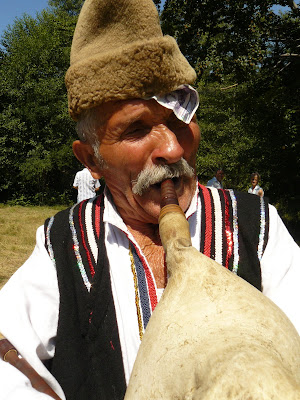
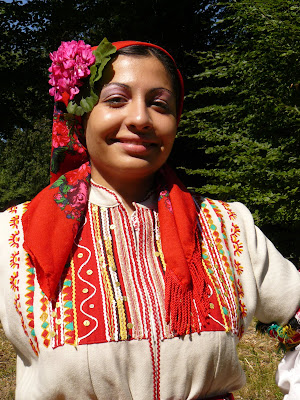
The Bulgarian folklore festival in Predel just ended today, I thought I would post some of the photos. The location is absolutely beautiful and the name of the festival is fitting because the mountains really do sing with folk music.
It was a great experience and I'll posts about the weekend following this week.
Historically the homeland of Alexander the Great, Macedon was a ancient kingdom that became a geographic region over time. When the Ottoman Empire fell, the the preceding power vacuum caused the political national groups of Serbia, Bulgaria and Greece to fight over the spoils. The Balkan Wars thus ensued and everyone ended up hating each other.
Macedonia, the word, is a time bomb waiting to happen. And that has happened, more than once. Over the past 100 years, four countries have been simultanenously claiming their Macedonian heritage and the Macedonian name much in the the way that Italians would claim their Roman heritage. The heritage is there . . . but there isn't exactly a clear definition of who is from the ancient Macedonian kingdom. Like most things in the Balkans, you get many nation states claiming a common heritage and making it an issue of national pride who is really (for instance) "Macedonian".
When the dust settled, Serbia had gained the lion's share of the region by making it a republic in its ill-conceived federation of states. Bulgaria lost a large portion of the ethnically Bulgarian regions and was left with the Pirin Mountains. Greece claimed the large southern part with the largest city Thessaloníki--the very same city that birthed the founder of the modern Turkish state-Mustafa Kemal Atatürk. Again we have the wonderful soft contradictions permeating the Balkan culture.
What the heck does FYROM Mean?
About 15 years ago, some of you might have noticed that a new country popped up in the Balkans called FYROM and you probably paused for a second to remark on its awkwardness. I bet even some of you tried to pronounce it (hand raised) -- f i r o m ? It actually stands for Former Yugoslavia Republic of Macedonian, which was the official name of the country when it was recognized in 1993 by the United Nations. Why would any budding nation choose to A) Pick an incredibly awkward acronym that stupid Americans would think is the actual name of the country, B) mention the country the declared independence from in their nation's name (Former English Colony United States of America, FECUSOA)? Answer: Well, someone had already taken that name . . . actually two countries, both Bulgaria and Greece.
The largest geographical region in Greece is called Macedonia and I'm sure you could imagine the confusion and outrage of the Greeks that their newly formed neighbor to the north was called the same name as their own territorial claim to Macedonian linage. This outrage caused Macedonia (now we are talking about the political state) to be initially called FYROM within the international community.
Greek Macedonia
Bulgaria also lays claim to name Macedonia to describe its southwest region encompassing the Pirin Mountains. This is seen more as a description of a cultural and territorial region than as a politically recognized region.
Pirin Macedonia
So, one has to create a fine but important line between the political Macedonia and the cultural Macedonia. There are parts of traditional Macedonian culture sprinkled throughout the northern part of Greece, southwest Bulgaria, Serbia, Kosovo and Macedonia.
Bulgarian or Macedonian Folk Songs?
When a Bulgarian from the southwestern Bulgaria (Macedonian region) celebrates a national holiday, birthday or festival, he (usually not she . . .) starts drinking rakia--grape brandy that is akin to moonshine--and sings the traditional folk songs that were taught to him as young child. But in this region of Bulgaria, what are those folk songs . . . ? They're old Macedonian songs from before Macedonia and Bulgaria where divided from the Balkan Wars.
When browsing the online chatter, Macedonians are indignant that Bulgarians sing Macedonian folk songs. Those songs represent a nationalism that is being attacked by other countries claiming those songs as part of their cultural ethos. Bulgarians are, for the most part, dismissive of Macedonia and its claims of difference--almost as if they were a the prodigal son that joined Serbia and will one day return. The conversation almost always ends with "Oh, they are Bulgarians; they speak Bulgarian with an accent".
So which are they, Bulgarian folks songs or Macedonian folk songs? Neither. They are folk songs sung from the geographic region of Macedonia in both Macedonia and Bulgaria. (How about that for running a fine line . . . )
This weekend, I will be attending the Pirin Sings (Пирин Пее) in the Pirin Mountains and I hope to gather a better picture of the traditional folk music played there. Pirin Sings (Pirin Pee or Пирин Пее) is a folklore festival held every two years on the first weekend of August where thousands gather in the mountain meadows for singing, dancing, drinking and eating. What's not like? Its a recommended hidden jewel of Bulgaria for intentional tourists.
I'll post examples of Macedonian music after the weekend, but for now, here's a famous Bulgarian Macedonian Folk Song that is sung in both Macedonia and Bulgaria.
Tangentially Referenced:
For anyone that has access to JSTOR, this is a great article about the Politics of Folk Music in the Balkans: The Politics of Folklore in Bulgaria, Carol Silverman


 Geographic Macedonia

 Now Working! Click the map for the full view

 Posts
Posts


